
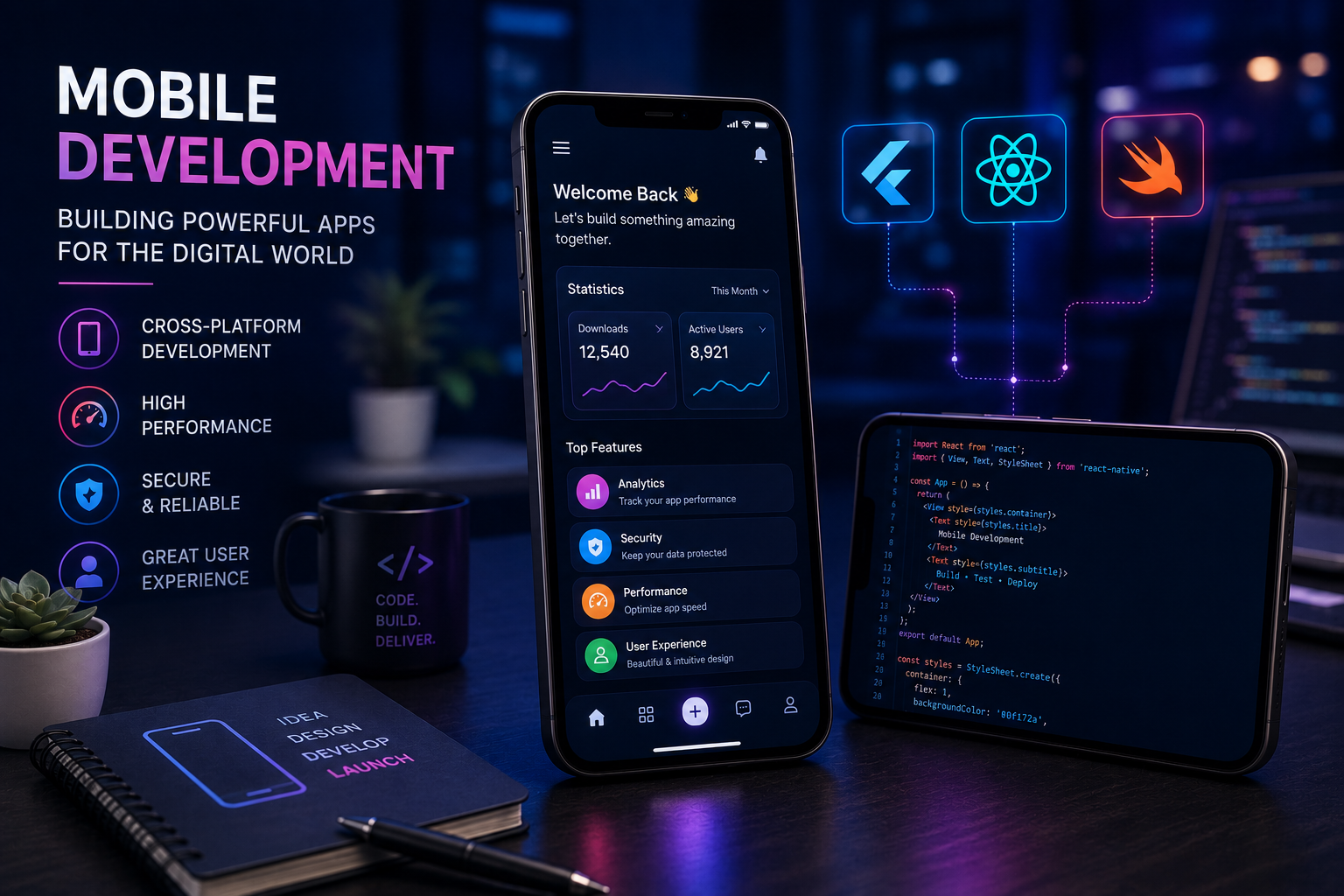
Flutter and React Native are popular choices for building cross-platform mobile applications.
Both technologies can support Android and iOS development, but the right choice depends on product requirements and development priorities.
Understanding Flutter And React Native
Flutter uses the Dart programming language and provides its own UI rendering approach for creating consistent interfaces.
React Native uses JavaScript and React concepts, making it familiar to many web development teams.
The best mobile framework is the one that fits your product, team and long-term maintenance requirements.
Thixpro Technology Team
What You Should Compare
Evaluate both frameworks against the practical requirements of your mobile product.
Performance
Review application behavior for your specific features and workflows.
Team Skills
Consider the technology experience already available in your team.
UI Requirements
Evaluate the complexity and consistency required by your interface.
Maintenance
Plan for updates, libraries and long-term application support.
When To Choose Each Framework
Flutter can be attractive for highly customized cross-platform interfaces and consistent rendering.
React Native can be a strong option for teams familiar with React and JavaScript-based development workflows.
Choose Based On Product Requirements
Start with your application features, integrations, performance requirements and future development roadmap.
A technical discovery process can help select the framework that best supports your mobile product.